Cleaning products are one of the leading causes of accidental childhood poisonings in the United States — over 200,000 calls to poison control centers each year involve household cleaners. Most of those calls involve children under age 5.
This guide covers which cleaning products are genuinely safe to use in homes with kids, which are actually dangerous, and the practical steps DFW families can take to keep homes clean without exposing children to harmful chemicals.
What Makes a Cleaning Product "Kid-Safe"
Three different safety considerations:
1. Toxicity if ingested. Children — especially under age 5 — explore by tasting. Anything they can reach, they may put in their mouth. Products that are dangerous if ingested include bleach, ammonia, drain cleaners, oven cleaners, and dishwasher detergent pods.
2. Respiratory irritation. Children's lungs are still developing. Aerosol cleaners, strong-scented products, and chemicals like ammonia or chlorine bleach can trigger asthma and irritate developing airways.
3. Skin and eye contact. Crawling babies and toddlers come into contact with cleaned surfaces all day long. Residue from harsh cleaners can irritate skin and eyes.
EPA's Safer Choice certification is the most reliable label to look for — products with the Safer Choice seal have been reviewed for human and child safety. Hygiene Maids uses Safer Choice products as the default for all client homes; we'll switch to your preferred products if you have specific allergy or sensitivity concerns.
Products to Avoid in Homes with Young Children
These cleaning products are commonly used but carry meaningful risk in homes with kids under 12:
Bleach (sodium hypochlorite). Highly toxic if ingested, fumes irritate developing airways, can cause severe chemical burns. Even diluted, residue on surfaces can transfer to skin. Avoid for daily cleaning; reserve for specific tasks (toilet bowl, mold remediation) with thorough ventilation.
Ammonia. Found in many glass cleaners and some all-purpose cleaners. Toxic fumes especially dangerous for asthmatic children. Combines with bleach to create deadly chlorine gas — a common accidental poisoning.
Drain cleaners (Drano, Liquid-Plumr). Extremely caustic. A single sip can cause severe esophageal burns. Should be locked up, never stored under sinks accessible to children.
Oven cleaners. Caustic spray cleaners with respiratory and skin contact hazards. Use only when children are out of the home; ventilate thoroughly.
Dishwasher detergent pods. Brightly colored and squishy — children mistake them for candy. The pods are a leading cause of pediatric poisoning calls. Switch to powder or gel detergents in homes with children under 6.
Aerosol disinfectants (Lysol, etc.) used carelessly. The fine mist is easily inhaled and irritates developing airways. Pump-spray alternatives are safer for daily use.
Pine-scented cleaners (Pine-Sol, etc.). Pine oil causes liver problems if ingested. Particularly dangerous for cats but also problematic for toddlers.
Glycol ethers (in many glass cleaners). Linked to developmental issues. Check labels for "2-butoxyethanol" or "ethylene glycol."
Strong artificial fragrances. Linked to respiratory issues and headaches in children. Includes most plug-in air fresheners and heavily scented surface cleaners.
Safer Alternatives That Actually Work
You don't need to choose between effectiveness and safety. These genuinely effective alternatives are also kid-safe:
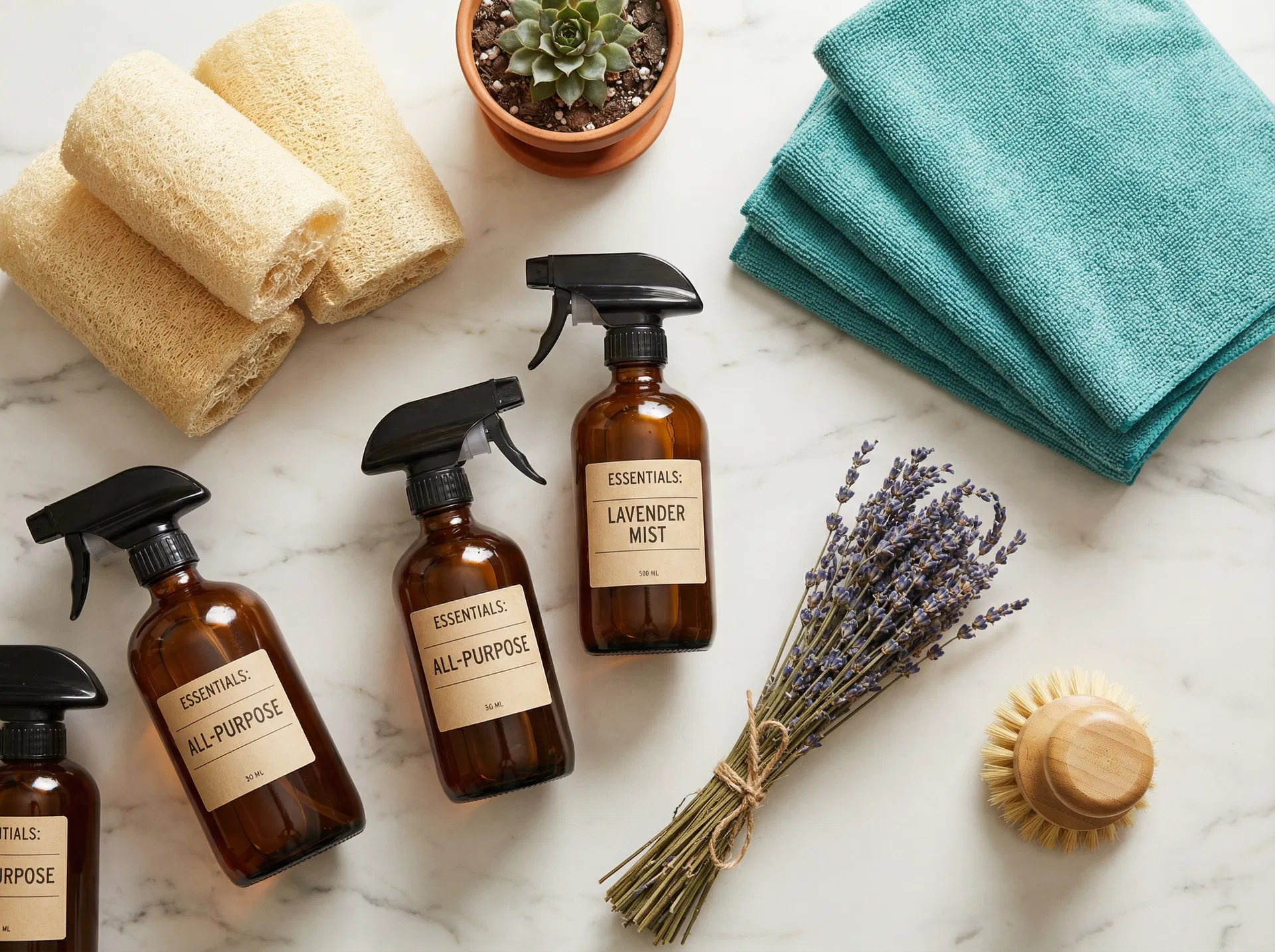
For surface cleaning: Mix equal parts white vinegar and water in a spray bottle. Add 5–10 drops of essential oil (lemon, lavender) for scent. Works on counters, tables, glass, mirrors, and most non-porous surfaces. Avoid on stone (etches marble, granite).
For disinfection: Hydrogen peroxide (3% from any drugstore) works as a true disinfectant — kills 99.9% of bacteria without bleach risks. Spray on surface, let sit 5 minutes, wipe.
For floors: Plain warm water + a few drops of mild dish soap. For deeper cleaning, add 1/2 cup white vinegar per gallon of water.
For toilets: Baking soda + vinegar fizz. Pour 1 cup baking soda in bowl, add 1 cup vinegar, let fizz for 15 minutes, scrub with toilet brush, flush.
For mold and mildew: Hydrogen peroxide (instead of bleach). Spray on grout and tile, let sit 30 minutes, scrub, rinse.
For kitchen grease: Baking soda paste (3 parts baking soda + 1 part water). Apply to greasy surface, let sit 5 minutes, scrub, rinse.
For laundry: Free & clear detergents (no fragrances or dyes). Major brands include All Free Clear, Tide Free & Gentle, Seventh Generation Free & Clear.
For air freshening: Open windows. Burn a beeswax candle. Use a small essential oil diffuser placed out of reach.
Brand Recommendations for Families
EPA Safer Choice products that work well in DFW homes:
Method — Available at Target, full line of Safer Choice cleaners. Strong on grease, gentle on surfaces.
Mrs. Meyer's Clean Day — Available everywhere. Plant-based ingredients, light fragrances. Strong all-purpose cleaner.
Seventh Generation — Widely available. Free & clear options for sensitive children.
Better Life — Slightly more premium pricing. Particularly good for floors and bathrooms.
Need Professional Cleaning in Dallas-Fort Worth?
Stop spending your weekends cleaning. Our licensed, insured, and background-checked cleaning professionals deliver a spotless home every time — backed by our 100% satisfaction guarantee.
Branch Basics — Concentrate that mixes with water for multiple cleaners. One bottle replaces 5–6 separate products.
For households who want professional cleaning with kid-safe products, Hygiene Maids uses Safer Choice products by default and can substitute your preferred products at no extra charge.
Storage: The Underrated Safety Issue
Where you store cleaners matters as much as what you use. Safety standards:
1. Never store cleaners under sinks accessible to children. Use upper cabinets with childproof latches, or a locked closet.
2. Keep cleaners in original packaging. Children may not recognize the danger of an unmarked container.
3. Never transfer cleaners to food containers. A cleaner in an old water bottle is a recipe for accidental ingestion.
4. Lock dishwasher detergent. Especially pods, even after switching to non-pod formats.
5. Keep poison control number visible. 1-800-222-1222 — the U.S. National Poison Help line, free and 24/7.
6. Childproof bathroom cabinets. Toilet bowl cleaner, bath products, and hair products are common pediatric poisoning sources.
During Cleaning: Best Practices with Children Present
1. Open windows or run exhaust fans. Even safer cleaners benefit from ventilation.
2. Move children to another room when using stronger products. Bleach (when needed), oven cleaner, and drain cleaner should never be used in the same room as children.
3. Rinse surfaces thoroughly. Even safer cleaners can leave residue. Rinse counters, floors, and any surface children touch.
4. Wait for floors to dry. Wet floors are a slip hazard for crawling babies and unsteady toddlers.
5. Don't combine cleaners. Even "safe" combinations can be problematic. Use one cleaner at a time.
6. Wash hands after cleaning. Children pick up residue from your hands during play.
What to Do If a Child Ingests a Cleaner
1. Stay calm. Most calls to poison control don't require hospitalization, but they need quick action.
2. Call Poison Control immediately: 1-800-222-1222 (U.S., free, 24/7).
3. Do NOT induce vomiting unless told to by Poison Control. Vomiting can cause additional damage as caustic substances re-enter the esophagus.
4. Have the product container ready. Poison Control will ask for the active ingredient and concentration.
5. Note timing. When was the product ingested? How much?
For exposure to skin or eyes: rinse with water for 15 minutes, then call Poison Control.
Hiring a Cleaning Service in a Family Home
If you're hiring a house cleaning service and have young children, ask:
1. Can you use my preferred products? Reputable companies will use products you provide at no extra charge.
2. What's your product line? Look for EPA Safer Choice certification. If they can't tell you, that's a flag.
3. Do you ventilate while cleaning? Should be standard practice.
4. How do you handle pet accidents? This question reveals their general product knowledge — enzyme cleaners are the right answer.
5. Will you avoid specific products on request? A reputable service will exclude any product on your request — bleach, ammonia, fragrances, etc.
Hygiene Maids' default product line is EPA Safer Choice certified, and we'll customize for any allergy, sensitivity, or family preference at no charge.
Bottom Line
Kid-safe cleaning isn't about buying expensive specialty products — it's about using common safer alternatives (vinegar, hydrogen peroxide, baking soda, mild dish soap), avoiding the genuinely dangerous products (bleach, ammonia, drain cleaners, dishwasher pods), and storing all cleaners out of reach.
For DFW families who want professional cleaning without exposure concerns, book Hygiene Maids — our default products are EPA Safer Choice certified, and we'll customize for any specific family need.